If your pet needs surgery, you probably have questions about how much pain they'll experience, how long recovery will take, and when they'll be back to their usual selves. For certain procedures, laparoscopic surgery offers a less invasive alternative to traditional surgery, using a few small incisions rather than one larger opening. A tiny camera allows the surgeon to see inside the abdomen and perform the procedure with specialized instruments. Because there's less disruption to surrounding tissues, pets often experience less postoperative discomfort and can return to their normal routines sooner.
At State of the Heart Veterinary Care in Denver, we perform laparoscopic spays, gastropexies, and abdominal organ biopsies in our own surgical suite, with the same familiar team that provides your pet's everyday care. We'll help you understand how laparoscopic surgery compares with traditional surgery, whether it's appropriate for your pet's procedure, and what to expect during recovery. If your dog or cat needs a spay, preventive gastropexy, or abdominal biopsy, contact us to discuss their surgical options and find out whether a minimally invasive approach might be a good fit.
Laparoscopic Surgery: The Basics
- Laparoscopy reaches the same organ through two or three small openings instead of one long incision, using a camera and instruments slim enough to pass through them.
- For the procedures it suits, those smaller openings usually mean less pain, a lower infection risk, and a quicker return to normal eating and play.
- The approach covers routine surgery like spays and preventive gastropexy, and it collects tissue from abdominal organs when a diagnosis needs a sample.
- General anesthesia and the usual pre-surgical workup are still part of it, and whether the keyhole route fits depends on your pet as much as on the procedure.
What Is Laparoscopic Surgery, Exactly?
Laparoscopy trades the single long incision into the abdomen in traditional surgery for two or three openings about the width of a pencil, often called “keyholes”. A camera puts a magnified view of the abdomen on a screen, and special instruments slim enough to work through those openings are used. The surgeon works by watching that screen instead of looking directly into the body.
To give the camera room to see, the abdomen is gently inflated with carbon dioxide, which lifts the body wall away from the organs underneath. A small structure looks much larger on the screen than it would to the naked eye, so fine blood vessels and tissue planes are easier to identify before anything is cut.
Why Does Keyhole Surgery Matter for Your Pet's Recovery?
Less tissue cut means less to hurt and less to heal: smaller incisions generally mean less post-operative pain, a lower risk of wound infection, and a quicker return to normal activity after laparoscopic surgery.
Most of that difference shows up at home rather than in the hospital. A dog who had two small openings often wants a normal evening walk sooner than one who had a longer incision through the body wall, and a smaller incision gives a dog or cat less to lick at. Licking is what turns a clean closure into a problem.
| What to compare | Laparoscopic approach | Traditional open approach |
| Incisions | Two or three small openings | One longer incision through the body wall |
| Visualization | Magnified view on a screen | Direct view into the open abdomen |
| Comfort afterward | Often less post-operative soreness | More tissue handled, more soreness |
| Activity restriction | Usually shorter, still required | Longer leash-only, no-jumping window |
| Best suited to | Spays, preventive gastropexy, organ biopsies | Large masses, bleeding, obstructions |
Which Procedures Can Be Done Laparoscopically?
Laparoscopy spans routine surgery and diagnostics, so the same approach that handles a planned spay can also collect tissue from an abdominal organ when a diagnosis needs a sample.
Laparoscopic Spay for Dogs and Cats
A laparoscopic spay usually removes the ovaries through two or three tiny openings instead of one longer abdominal incision, and many dogs go home more comfortable than they would after a traditional spay. It's still a spay, with the same permanent end to heat cycles and the same drop in the risk of mammary tumors and pyometra, a serious uterine infection.
Laparoscopic spays in cats come up less often than in dogs, largely because a smaller abdomen leaves less room to work, though the comfort advantages hold when a cat is a good candidate. When to spay or neuter depends on breed, projected adult size, and how a dog or cat lives, and that timing question is separate from which surgical approach fits. We perform laparoscopic spays here alongside traditional spay and neuter surgery for dogs, cats, puppies, and kittens.
Gastropexy to Prevent Bloat in Deep-Chested Dogs
A gastropexy tacks the stomach to the body wall so it can't rotate, and that rotation is what makes bloat life-threatening. Bloat begins as a stomach filling with gas; once it twists, called gastric dilatation and volvulus, the blood supply gets cut off and a dog can be in serious trouble within hours. Great Danes, Standard Poodles, Weimaraners, Setters, and other deep-chested breeds carry the highest risk. The procedure is often done laparoscopically, sometimes during the same anesthesia as a spay, which spares a dog a second recovery.
A gastropexy lowers the chance of the twist; it doesn't make a dog immune to a gas-filled stomach. If a deep-chested dog is pacing, retching without bringing anything up, drooling, and looks swollen behind the ribs, that's an emergency either way. We handle urgent and emergency care during our hours, including stabilizing a critical patient before transfer, so call us right away. If those signs start when we're closed, head straight for a 24-hour veterinary emergency hospital, because bloat can't wait for our next open day.
Biopsies of the Liver, Intestine, and Other Abdominal Organs
Chronic vomiting, diarrhea, unexplained weight loss, or a mass found on X-ray or ultrasound can reach a point where bloodwork and imaging stop short of an answer, and biopsy becomes the next step toward getting an answer. We offer two ways to accomplish this without a traditional abdominal exploratory surgery:
- Endoscopy: A gastrointestinal biopsy is often what separates inflammatory bowel disease from something more serious, like lymphoma. A visiting specialist performs endoscopy here, and a scope can reach the stomach and upper intestine without an incision at all.
- Laparoscopic organ biopsy: When the answer sits in the organs outside the stomach and intestines, collecting an organ biopsy from the liver, kidney, or another abdominal organ lets the surgeon choose the piece of tissue that looks abnormal using the camera through the keyholes.
For a cat or dog who is already thin and tired, a few small openings ask less of them than a full abdominal incision.
What Should You Expect on Surgery Day and During Recovery?
The day follows the same path as any other surgery: fasting instructions the night before, an exam and pre-anesthetic bloodwork before anesthesia, the procedure itself, then a discharge conversation before your pet goes home. Recovery is usually shorter than after an open operation, and the restrictions still apply.
Grogginess, a wobbly walk to the water bowl, and a skipped dinner are all normal after anesthesia, and most pets are recognizably themselves again within a day or two.
| Expected in the first day or two | Worth a phone call |
| Sleepy, slow, a little clingy or withdrawn | Weakness that's worse on day two instead of better |
| One skipped meal, then a normal appetite | Nothing staying down, or no interest in food after 24 hours |
| Small incisions dry, with pink edges | Swelling, discharge, a gap in the closure, or an odor |
| Soreness that eases with the prescribed pain medication | Crying, panting, or refusing to lie down |
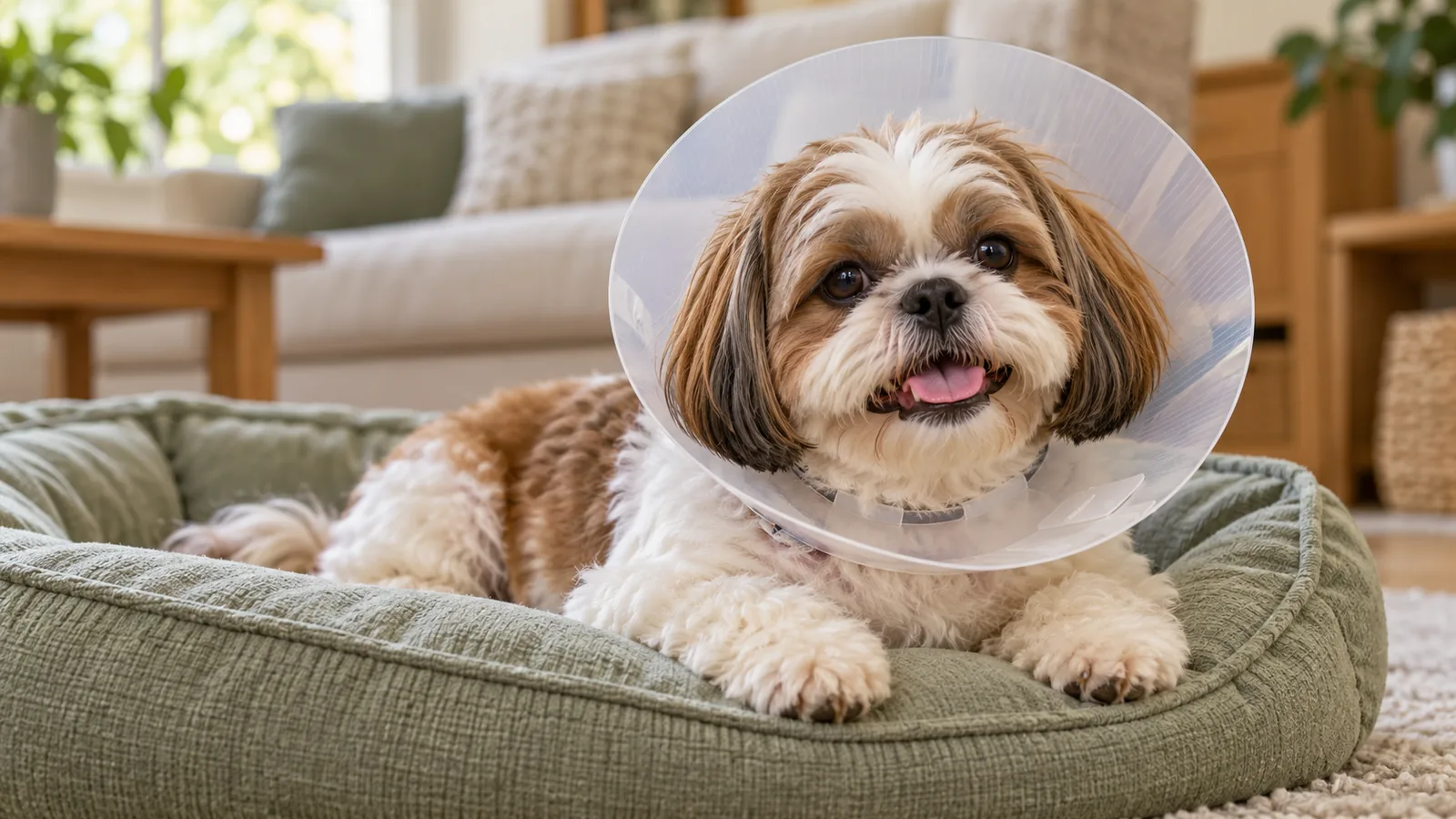
Never reach for human pain relievers: ibuprofen and acetaminophen are toxic to dogs and cats and can damage the kidneys, liver, and red blood cells. Skip baths and swimming until the incisions have sealed, because water gets into gaps that haven't closed yet, and leave the ointments and hydrogen peroxide in the cabinet. Keep the cone on if your pet licks, keep walks on leash so you can prevent unexpected zoomies, and give cats a few days without launching onto the top of the bookcase so a hard landing doesn't strain the closure.
What Are the Risks, and When Is Laparoscopy Not the Right Choice?
Laparoscopy is generally safe in appropriate cases, and it's still surgery under general anesthesia, carrying the same risks that come with being asleep.
Small incisions are easier to heal, but wound dehiscence, the reopening of a surgical incision, still happens when a pet licks at the site or returns to full-speed play too early, and it tends to show up in the first week or two. Tiny openings can make the activity restrictions feel optional, and they aren't.
The keyhole route also isn't the right call for every patient:
- A large mass: bulky tissue needs the room an open incision gives.
- Active bleeding or a bowel obstruction: both need the working space of an open approach.
- Dense scar tissue from a previous abdominal surgery: scarring can limit what the camera can see and where instruments can safely go.
- A very small body: a tiny abdomen leaves little room to work.
Sometimes that gets decided partway through: if the view isn't clear enough, or the surgeon finds something the instruments can't safely manage, a laparoscopic procedure converts to a traditional open one. That's a judgment made for your pet's safety rather than a complication, and it belongs in the consent conversation before the day arrives.
Laparoscopy also needs specialized equipment and training, so not every hospital offers it, and the cost of the keyhole version often differs from the traditional one.
How Do You Decide If Laparoscopy Is Right for Your Pet?
Whether laparoscopy is right for your pet comes down to the specific procedure, your pet's size and overall health, the breed risk driving the surgery, and what recovery at home can realistically look like. For a Denver family already thinking about a preventive gastropexy for a Great Dane puppy, that conversation can happen a year before the surgery. For a senior cat who needs a liver sample, it happens that same week.
Our veterinarians will walk through that comparison for the exact procedure your pet needs, including the cases where opening the abdomen is the better medicine. Ask directly whether a keyhole option exists for whatever is being planned, because the answer sometimes changes the plan.
What Else Should You Ask Before a Laparoscopic Procedure?
Is a laparoscopic procedure safer than traditional open surgery?
For the procedures it suits, laparoscopy generally means less tissue trauma and a lower risk of wound complications. The anesthetic risk is the same, because your pet is just as deeply asleep either way. What makes any operation safer is a thorough pre-surgical workup, close monitoring, and a patient who's a good candidate. For some pets the open approach is safer, and we'll say so.
Does my pet still need general anesthesia?
General anesthesia is part of every laparoscopic procedure. The abdomen has to be inflated and completely still, and no dog or cat holds that position awake. The pre-surgical exam and bloodwork exist to make the anesthesia as safe as it reasonably can be, and monitoring continues until your pet is awake, warm, and comfortable.
Can any dog or cat have laparoscopic surgery?
Many healthy dogs and some cats are reasonable candidates for the procedures this approach suits, but body size, weight, previous abdominal surgery, and the operation itself all factor in. Very small patients leave little working room, and some findings call for an open incision instead.
Ask Whether a Laparoscopic Option Fits Your Pet's Surgery
When laparoscopy suits the procedure your pet needs, those few small openings can mean a less painful recovery and a faster return to normal. State of the Heart Veterinary Care in Denver performs both laparoscopic and traditional open procedures, and which one fits belongs in a conversation with you. If a spay, a preventive gastropexy, or an abdominal biopsy is coming up, reach out and we'll walk you through both.