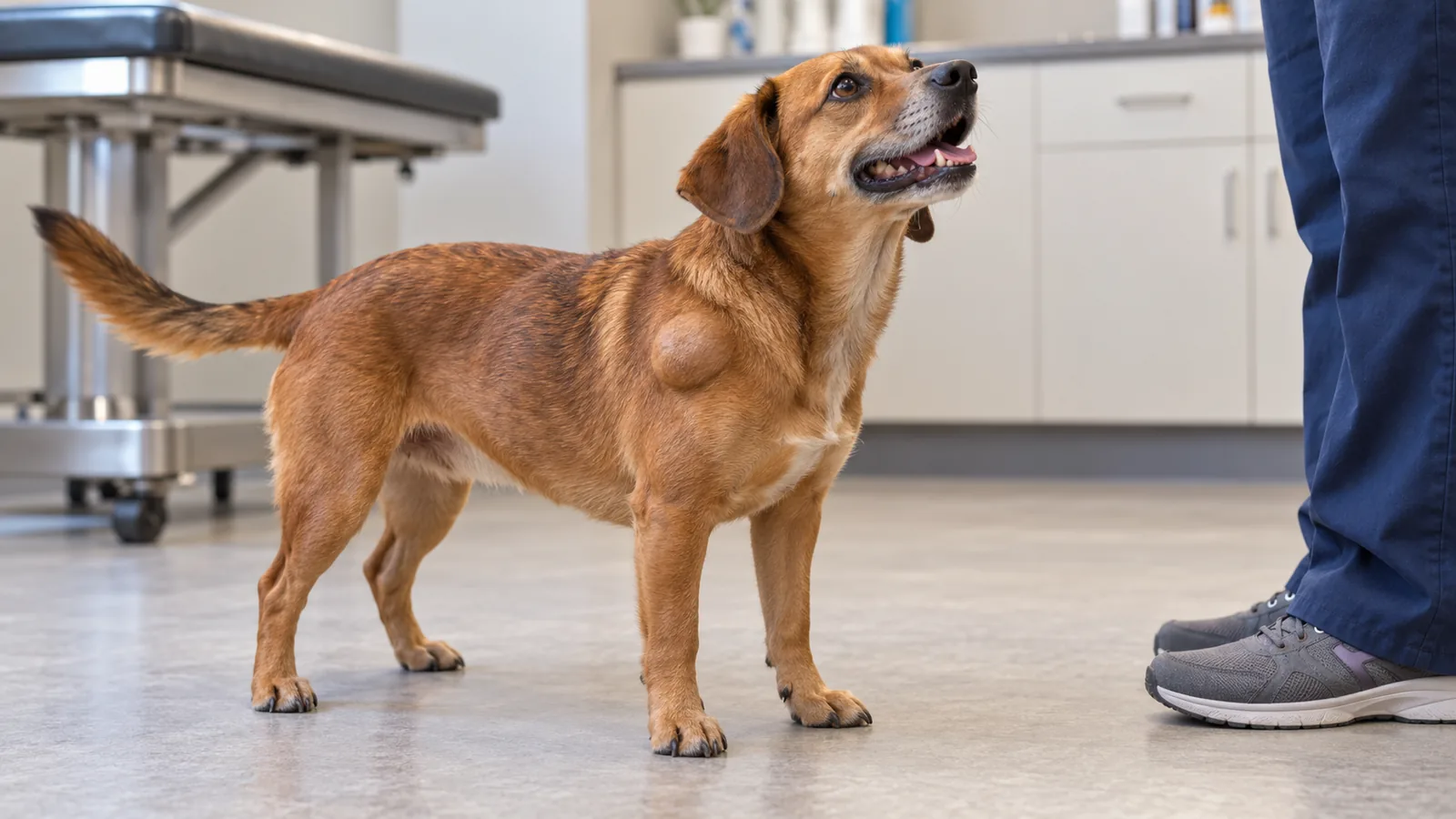
A lump you have never felt before should be looked at within a week or two, and sooner than that if it is painful, bleeding, draining, or visibly bigger than it was a few days ago. Fatty growths, cysts, abscesses, and cancerous masses can all feel alike under your fingers, so the details that actually help us are how fast it showed up and how much it has changed since. Anything hot, open, or growing quickly needs a same-day look. A lump that has sat quietly for months still deserves an appointment soon, because small and early is the easiest version of any mass to treat.
It is normal to feel a jolt when your hand finds something that was not there last month, and then to spend a week talking yourself into and out of calling us. State of the Heart Veterinary Care in Denver keeps room for same-day sick visits when a mass is painful, bleeding, or changing quickly, and if it needs to come off, that surgery happens in our own suites. A new lump should not wait for next year's wellness exam, and we will be straight with you about what is worth testing now and what we can safely watch. If you found something on your pet this week that you do not like the feel of, ask us to take a look.
A New Bump Under the Skin: The Short Version
- A lump you've never felt before deserves an exam within a week or two, and a same-day appointment if it's hot, painful, bleeding, draining, or suddenly bigger
- Fat, fluid, infection, and cancer can all feel identical through skin, so sorting them out means looking at the cells
- Testing a lump usually starts with a fine needle aspirate rather than with surgery
- Small is easier than large for nearly every lump, so finding one early means a simpler surgery
Does Every Lump Need to Be Checked by a Vet?
Every new lump should be checked, because many turn out to be harmless and nobody can sort harmless from serious by feel alone. A mass under the skin can be trapped fluid, a plugged oil gland, bacteria sealed in after a puncture, a pocket of fat, or a tumor. An exam narrows the list, and testing settles it.
Cancer isn't one diagnosis either. The types of cancer run from slow local growths that a single surgery resolves to aggressive disease that spreads before the lump ever feels alarming. Size changes what that surgery looks like: a pea-sized mass comes off with a small incision and a thin rim of normal tissue around it, while the same tumor at golf-ball size can mean a longer surgery and more to recover from. On a lower leg or a face, there may not be enough loose skin left to close comfortably, resulting in a staged or larger reconstructive surgery.
How Can I Tell What Kind of Lump My Pet Has?
You can't tell at home, but the details you gather narrow it down. How fast it appeared, whether it slides under the skin or feels anchored to what's below, whether it's warm or sore to the touch, and what it has done over the past two weeks all shape where we start.
Which Lumps Are Usually Harmless?
Much of what families find is one of a few everyday swellings that have nothing to do with cancer.
- Fatty growths: Lipomas are soft, movable pockets of fat just under the skin on the chest, belly, or flank of a middle-aged or older dog. Many need nothing more than a measurement in the chart and a check each visit.
- Skin tags, cysts, and warts: Older dogs and cats collect small skin tags and sebaceous cysts, which are plugged oil glands that can swell, rupture, and refill. Young dogs sometimes break out in clusters of wart-like growths around the mouth from a papilloma virus that usually clears on its own.
- Elbow calluses: Thick, gray, hairless elbow calluses build up where a big dog's weight presses bone against tile or concrete, and they matter medically only once they crack, ooze, or thicken into something tender.
Which Lumps Come From Infection Instead of a Tumor?
Plenty of swellings aren't tumors at all. They're the body walling off bacteria, a foreign object, or inflamed tissue, and they tend to be the painful ones.
- Abscesses: Abscesses form when bacteria enter through a bite or puncture and get sealed under the skin, and the swelling is hot, painful, fast to appear, and prone to rupturing into foul-smelling drainage. In cats, the lump often shows up several days after a scuffle nobody witnessed.
- Anal sac disease: Scooting, licking under the tail, and a firm swelling to one side of the rectum usually point to anal sac disease, an impaction or infection of the scent glands beside the anus, though an anal sac tumor can look similar from the outside.
- Sore spots between the toes: A red, draining bump in the web between two toes, known as interdigital furunculosis, is inflamed and infected tissue rather than a growth, and it comes back until the allergy or foot shape behind it gets addressed.
- Foxtails: In Denver and along the Front Range, foxtails work into paws, armpits, and ear canals all summer, and the swelling is tissue walling off a grass awn that keeps migrating until someone takes it out.
Don't squeeze, pop, or lance a hot swelling at home. Pressure drives infection deeper and turns a contained problem into a spreading one. A painful or draining mass needs a same-day sick exam, where we can open it properly, flush it, and sample it.
What Does a Cancerous Lump Feel Like on a Dog or Cat?
There's no single feel to a cancerous lump: some are firm and fixed, others soft and movable. What raises concern is how a mass behaves. One that doubles in a month, bleeds, ulcerates, or feels anchored to the tissue underneath belongs on the short list of signs of cancer that deserve an appointment this week.
The tumors below are some of the more common ones families find, grouped by where they show up. The list isn't comprehensive, and plenty of cancers look like something harmless, so testing the cells is the only way to know what a lump really is.
Which Skin and Anal Gland Tumors Should I Know About?
- Mast cell tumors: They're among the common skin cancers in dogs and show up more often in Boxers, Bulldogs, and Retrievers. They're also the hardest to judge by feel, because they can seem soft and unremarkable one week and swell the next after being handled.
- Melanoma: Dark, pigmented bumps on a dog's haired skin are often benign, but melanoma in dogs that starts in the mouth or in the nail bed of a toe tends to be aggressive. A swollen toe, a nail that falls out on its own, or a new dark spot inside the mouth gets tested promptly.
- Squamous cell carcinoma in cats: Squamous cell carcinoma favors sun-exposed white skin at the nose, eyelids, and ear tips, usually appearing as a crusty sore that never finishes healing rather than a round lump.
- Anal sac tumors: Anal sac adenocarcinoma shows up in dogs as a firm lump beside the rectum, and it's often small enough that it's found only during a rectal exam. Some of these tumors raise blood calcium, which can show up as increased thirst and urination before anyone notices a lump.
- Perianal gland tumors: Slow-growing lumps around the anus of older, unneutered male dogs are often benign perianal adenomas, which usually respond well to removal along with neutering.
What Do Tumors in the Mouth Look Like?
Oral tumors are rarely felt from the outside, so the clues tend to be new or worsening bad breath, drooling, blood on chew toys or in the water bowl, a loose tooth in an otherwise healthy mouth, trouble chewing, or swelling along the jaw or face. Melanoma, squamous cell carcinoma, and fibrosarcoma are the most common malignant ones, while growths on the gums called epulides are often benign but can still grow into the bone beneath them. We remove and biopsy oral masses in our own dentistry suites, and dental X-rays show how deep a mass reaches.
Which Tumors Grow in Muscle, Fat, or Bone?
- Soft tissue sarcomas: Soft tissue sarcomas in dogs are firm, usually painless masses under the skin or within muscle, and they can feel surprisingly like a fatty lipoma. They send small fingers of cells into the surrounding tissue, so they need a planned surgery with wide margins rather than a quick removal.
- Injection-site sarcomas in cats: A firm lump where your cat received a vaccine or injection should be biopsied if it's still there three months later, grows larger than about 2 centimeters (roughly a grape), or is still growing a month after the injection.
- Bone tumors: A firm swelling on the leg itself, over the bone rather than in the skin, is a different problem from a skin mass, especially when it comes with a limp that won't settle. Bone tumors such as osteosarcoma need imaging early, so a new lump plus a new limp gets worked up together.
Which Mammary and Reproductive Tumors Should I Watch For?
- Mammary tumors: A lump along the belly of a female dog or cat who was spayed late or not at all may be a mammary tumor. Roughly half are malignant in dogs, and the large majority are malignant in cats, so they get tested rather than watched.
- Testicular tumors: Testicular tumors are common in older unneutered male dogs, and a retained testicle that never dropped into the scrotum carries a much higher risk. One testicle that's larger, firmer, or shaped differently than the other is worth a look, and some of these tumors make hormones that thin the coat or enlarge the nipples.
What If the Lumps Are Under the Jaw or Behind the Knees?
Firm swellings that come up on both sides at once under the jaw, in front of the shoulders, or behind the knees are usually enlarged lymph nodes rather than skin growths. Infection and inflammation can enlarge lymph nodes, but so can lymphoma, one of the more common cancers in both dogs and cats. Several swollen nodes at once need testing promptly, and a needle sample is usually enough to tell the difference.
How Do Vets Figure Out What a Lump Is?
A fine needle aspirate is usually the first step, and it can often happen at the visit where you point the lump out. A small needle pulls a few cells out of the mass with no incision and no stitches, and reading those cells under a microscope, known as cytology, answers the fat-versus-tumor question for many masses without surgery.
Cytology doesn't always give us a clear answer. If the sample contains mostly inflammatory cells, doesn't have enough cells to evaluate, or raises concerns about cancer, we may recommend a biopsy. This involves removing a small piece of the mass, or sometimes the entire mass, and sending it to a pathologist for a closer look. Unlike cytology, a biopsy shows how the cells are arranged within the tissue and can help identify the tumor type and grade. These results help us plan treatment, including how much surrounding tissue may need to be removed during surgery. If the entire mass was removed, the pathologist can also check whether the surgical margins are clear of tumor cells. We may also recommend imaging, such as X-rays or ultrasound, to evaluate deeper masses or look for signs that cancer has spread.
| Test | The question it answers | What it involves |
| Fine needle aspirate | Fat, fluid, infection, or tumor? | A small needle, no incision, no stitches |
| Biopsy | Which tumor type, and how aggressive? | Removed and read by a pathologist |
| Ultrasound | Deeper tissue, lymph node, or organ involved? | Clipped hair and gel, sometimes light sedation |
| X-rays | Bone involved? Anything in the lungs? | Quick positioning, sometimes light sedation |
We handle all of these at State of the Heart. Biopsies go to a veterinary pathologist, and ultrasound is performed by a traveling specialist who comes right to our hospital.
When Does a New Lump Need Same-Day Attention?
A mass needs a same-day appointment when it's hot, painful, bleeding, open and draining, or clearly larger than it was earlier in the week. Anything interfering with eating, walking, or breathing comes first, and so does a bump on a pet who suddenly seems unwell.
Any other new lump that doesn't seem to bother your pet should be seen within a week. The same goes for a lump that regrows where one was removed; that usually means cells were left behind, and that goes on the schedule soon rather than waiting for next year's visit.
Our team handles urgent pet care during business hours, so a morning call about a mass that bled overnight usually turns into a visit that day. If a lump is bleeding or oozing heavily, or your pet is in distress when we're closed, a 24-hour emergency hospital is where to go.
What Are the Treatment Options for a Lump, and What's the Outlook?
What happens next depends on what the testing showed rather than on the size of the lump. A benign growth that has been tested gets measured and monitored, an infected swelling gets drained and treated, and a tumor gets removed, with chemotherapy or radiation added for the types that call for it. Caught early, the outlook for many is good.
When Is Monitoring a Lump Enough?
Monitoring is a real plan as long as the mass has a diagnosis behind it. A measurement in millimeters, a location, and a date let the next recheck tell true growth from a lump that only feels bigger because you keep checking it.
We'll still recommend taking a benign growth off in some cases: one sitting where a harness rubs, one your dog keeps licking open, or one in an armpit that changes how your pet walks. The same goes for one growing steadily enough that removing it next year would mean a far bigger surgery.
How Is an Infected Lump Treated?
Infected swellings get drainage and flushing first, antibiotics chosen for the organism, and the cause addressed so the swelling doesn't come back, whether that's a grass awn, an allergy, or an ear infection.
What Happens If a Lump Turns Out to Be Cancer?
For a malignant mass, the plan starts with how far it has spread. Digital x-rays show whether a tumor has reached the lungs or involves the bone beneath it, which changes what surgery can accomplish. Grade and margin decide how much tissue a removal has to take, and much of that work falls under the soft tissue surgeries our team performs. Once the pathology report is back, we'll go over the surgical plan, what recovery looks like, and what it costs, and nothing gets scheduled until you've had your questions answered. Chemotherapy and radiation are a veterinary oncologist's work, and we can help get that referral started. Many pets with a malignant skin mass live well for years afterward, especially when the tumor came off while it was small.
Can I Prevent Lumps on My Dog or Cat?
Most lumps can't be prevented, because fat deposits, cysts, and many tumors come down to age, breed, and genetics. A few risks can be lowered, though, and what you can always change is how early a lump gets found, which comes from a hands-on check at home every month rather than once a year in the exam room.
- Make the check part of something you already do: Run both hands over your dog or cat while you brush them or while they're sprawled across your lap. Work in a pattern that covers the armpits, groin, under the jaw, along the ribs, and down each leg.
- Write down what you find: A note on your phone with the date, the spot, and a size you can picture later, such as a pea or a grape, beats a guess at the appointment.
- Talk with us about spay and neuter timing: Spaying lowers the risk of mammary tumors, especially when it's done young, and neutering removes the risk of testicular tumors, including in a testicle that never dropped.
- Limit sun on pale skin: White cats and pale-nosed pets lounging in Denver's strong, high-altitude sun are more prone to squamous cell carcinoma, so shade during midday hours helps.
- Treat skin problems early: Managing allergies, clearing up ear infections, and keeping bedding dry means fewer hot spots, fewer sore feet, and fewer inflamed bumps.
What Families Ask Us About Lumps and Bumps
My dog has had the same soft lump for years. Does it still need checking?
A growth that's already been identified and hasn't changed usually just needs a measurement at each visit. What's worth confirming is whether it's truly the same lump, because families often find two or three in one area and a new one is easy to mistake for growth of the original. If nobody has ever tested it, that's different: how long it's been there tells us about speed, not about what the cells are.
Will my pet need to be sedated to have a lump tested?
A fine needle aspirate is quick, and many dogs and cats sit through it with gentle hands and a treat. Some need light sedation, depending on where the mass sits, how sore it is, and how your pet feels about being held still. A biopsy is different: removing a piece of tissue means local anesthetic at minimum and often general anesthesia. We'll tell you which one we're planning before anything happens.
Are lumps on cats as common as they are on dogs?
Cats get fewer skin masses overall, but a larger share of feline ones turn out to be malignant, so we tend to test a cat's lump earlier instead of watching it. A bump under dense fur can go unnoticed for months. Any firm lump on a cat that persists, grows, or sits at an old injection site deserves a look rather than a wait.
What to Do With the Lump You Just Found
State of the Heart Veterinary Care sees dogs and cats from across Denver for exactly this question, and we'll gladly look at ten harmless bumps to catch the one that matters. If there's a new bump on your dog or cat, schedule an exam. We'll put hands on it, tell you what we think it is, and say whether it needs testing today or a measurement and a recheck.