Your pet limps because a leg hurts or because the nerves controlling it aren't working properly, and the way the limp looks is one of the best clues to which it is. Maybe your dog came in from the yard holding up a back paw, or your cat jumped off the bookshelf and is suddenly walking on three legs. Some limps need care within hours, while many others can be watched at home for a day or two with the right care.
Watching your pet hobble is hard, especially when you can't tell a sprain from a fracture. State of the Heart Veterinary Care in Denver holds room in the schedule for same-day appointments when a limp comes on suddenly, and we take digital X-rays on site so answers don't have to wait. We start pain relief while we work out what's going on, and a visiting board-certified orthopedic surgeon handles cases that need surgery right here in our hospital. If your pet is limping today, let us take a look.
What Matters Most When Your Pet Is Limping
- A limp means a leg hurts or a nerve isn't working properly, and whether your pet lifts the foot or drags it helps tell the two apart.
- A leg that carries no weight, bends at a new angle, bleeds, or drags, or a cat who suddenly can't use both back legs, needs care within hours.
- For a mild limp, stop activity, film your pet walking, prevent licking, and rest them, then come in if the limp isn't clearly better within 48 hours.
- Human pain relievers like ibuprofen, naproxen, and acetaminophen can seriously harm dogs and cats, so never give them while you wait.
Why Do Dogs and Cats Start Limping?
Dogs and cats limp for two broad reasons: a leg hurts, or the nerves aren't controlling it properly. Pain makes your pet shorten their stride or hold the leg up to protect it. Nerve problems cause scuffing, knuckling, or dragging, sometimes with surprisingly little pain. Causes range from a torn nail to arthritis, ligament tears, spinal disease, infection, and cancer.
How the limp looks narrows things down quickly:
- Occasional or constant: A skip every few steps often points to a slipping kneecap or early joint disease, while a limp with every step usually means ongoing pain.
- Weight on the leg or three-legged: A leg held completely off the ground signals more severe pain than a toe-touching limp.
- Better or worse after rest: Stiffness after a nap that eases with movement is typical of arthritis. A limp that worsens with exercise leans toward soft tissue injuries and ligament tears.
- Lifting the foot or dragging it: Lifting protects a painful foot. Scuffed toes, nails worn on top, or a dragging leg suggest a nerve or spinal cord problem.
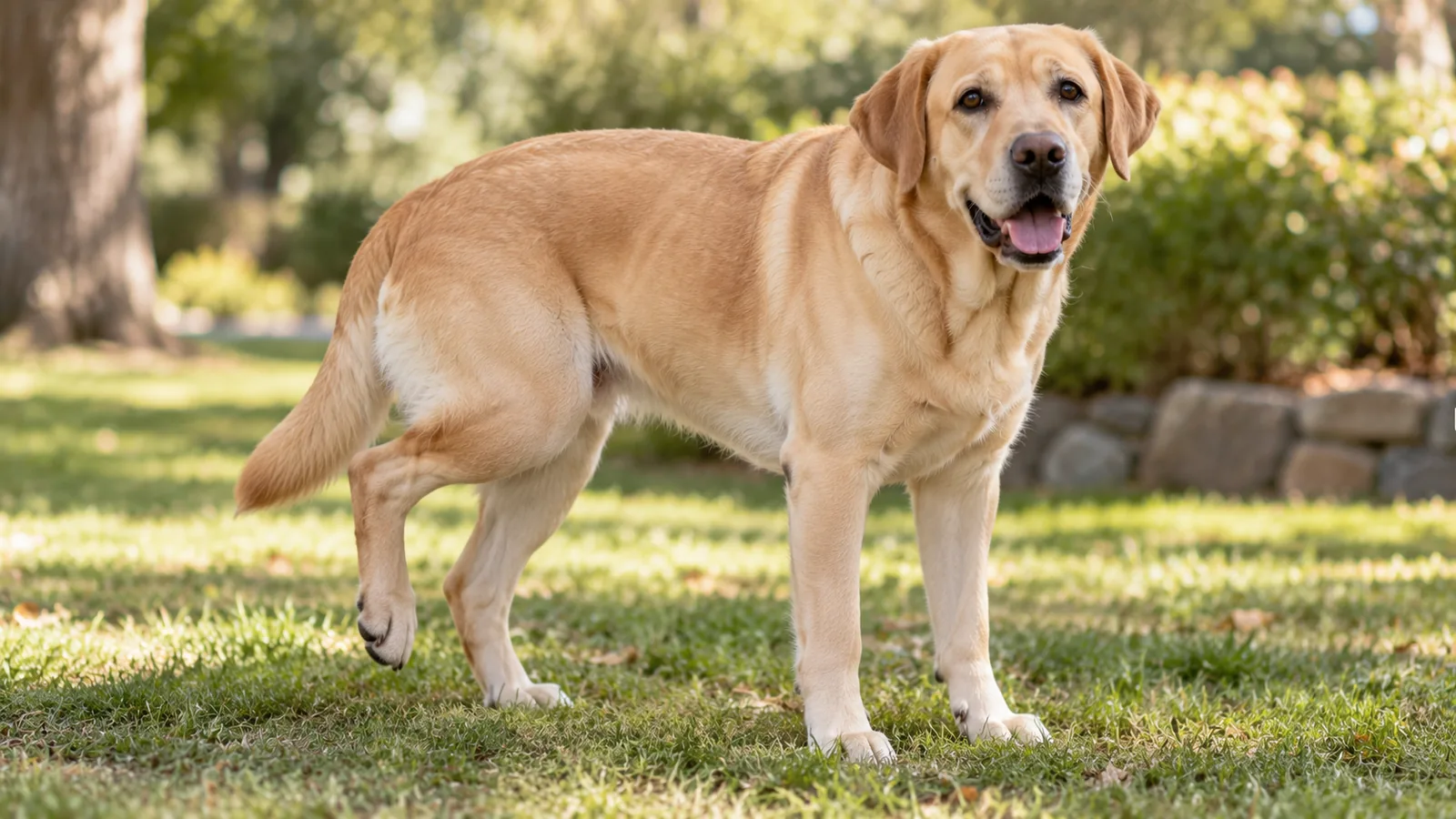
Head bobbing is one of the classic signs of a limp: when a front leg hurts, the head lifts as the sore foot lands. With a back leg, the hip on the sore side hikes up instead.
When Is a Limp an Emergency?
A limp is an emergency when your pet won't bear any weight after a fall, car accident, or dog fight, or when a leg dangles, swells quickly, or bends at a new angle. Open wounds, bleeding that won't stop, dragging legs, or a wobbly, hunched pet with a painful back belong here too. A cat who suddenly can't use both back legs and is crying, with cool back feet, is usually throwing a blood clot called a saddle thrombus, which is life-threatening.
We handle urgent and emergency care during our open hours and stabilize critical patients before transfer. On evenings and Sundays, head to a 24-hour emergency hospital. To get there safely:
- Protect yourself. A soft muzzle or a towel over the head prevents pain bites, but skip the muzzle if your pet is vomiting or struggling to breathe.
- Keep the spine flat if a back injury is possible, using a board or a taut blanket for large dogs and a carrier with the top removed for cats and small dogs.
- Don't splint the leg. A homemade splint can shift a broken bone, so let your pet hold the leg where it's comfortable.
- Call ahead so the team is ready.
When Is It Okay to Monitor a Limp at Home?
Some limps can wait a few days if your pet is bright, eating, and still bearing weight. The classic example is the small dog who holds up a back leg for a few strides, then runs on normally, a kneecap popping out and back in. A cracked nail that isn't dangling, a mild pad scrape, and a limp that crept in over weeks and loosens with movement fit here too. For any of these, schedule an exam rather than waiting for it to fade, but don’t feel like you need to rush into the ER overnight.
What Should You Do First When You Notice Your Pet Limping?
Stop all activity, bring your pet somewhere quiet, and take a short video of them walking, since many pets walk perfectly in the exam room. Keep them from licking any wound, using a cone if needed, then call us. Those few steps prevent further injury and give us the information we need to help.
Film on a flat surface as your pet walks toward you, away from you, and past you. Adrenaline hides limps remarkably well, and plenty of dogs strut into our exam room and hobble back to the car. Licking carries bacteria in, so a cone matters even for a small pad cut. Then call us and we'll help you decide how soon your pet needs to come in.
How Can You Check Your Pet's Leg at Home?
Skip this entirely if your pet is crying out, guarding the leg, or the limb is obviously broken or paralyzed. Even gentle pets bite when a sore spot is touched, so stop at the first growl or flinch. If your pet is calm:
- Check the paw pads for cuts, burns from hot summer pavement, or irritation from winter ice melt.
- Spread the toes to look for thorns, foxtail seeds, ice balls, or swelling.
- Look at each toenail for cracks or bleeding at the nail bed.
- Compare foot temperature with the opposite foot. A cold foot, especially in a cat, needs to be seen right away.
- Run your hands up the leg, comparing sides for swelling, heat, or a spot that makes your pet pull away.
- Test foot placement. Supporting your pet's weight, gently turn one paw over so the top of the foot touches the floor. Most pets flip it back instantly, and a slow correction suggests a nerve or spinal cord problem.
How Do You Care for a Mild Limp at Home?
For a mild limp, rest is the main treatment:
- Real rest: Leash walks for bathroom breaks only, no stairs or jumping. Cats do best in one small room without high perches.
- Broken nail care: Styptic powder or cornstarch pressed onto a bleeding nail stops most bleeding, and a cone prevents chewing.
- Watching for changes: New swelling, heat, worse limping, or constant licking means it's time to come in.
- No human pain relievers: Ibuprofen, naproxen, and aspirin cause ulcers and kidney damage in pets, and one acetaminophen tablet can kill a cat.
If the limp isn't clearly better within 48 hours, it's time for a visit.
What Causes Limping in Dogs and Cats?
Limping in dogs and cats comes from minor injuries like torn nails and pad cuts, major injuries like ligament tears and fractures, nerve and spinal cord disease, joint problems such as hip dysplasia and arthritis, infections, immune and growth disorders, and, less often, cancer. The timing and pattern of the limp help sort out which group it belongs to.
Minor Injuries
Cracked nails bleed more than their size suggests, and sprains and muscle tears often look worse after a nap than right after the injury. Around Denver, cactus spines on foothill trails, pads scraped on rock, and bee stings that swell a paw all fit here too.
Major Injuries
The most common cause of hind-leg lameness in dogs is a cruciate ligament injury, the dog version of a torn ACL. After a fall or a car accident, broken bones and dislocated hips usually mean no weight on the leg at all. Puppies and kittens have soft growth plates that crack more easily than adult bone, so don’t wait on a young pet.
Nerve and Spinal Cord Problems
- Intervertebral disc disease (IVDD): A ruptured disc presses on the spinal cord. It's painful, common in Dachshunds, French Bulldogs, and Corgis, and can progress to paralysis within hours.
- Fibrocartilaginous embolism (FCE): A bit of disc material blocks blood flow to the spinal cord, causing sudden, usually one-sided weakness that often isn't painful after the first moments.
- Degenerative myelopathy: A slow, painless loss of hind-leg coordination in older dogs, especially German Shepherds, Corgis, and Boxers.
- Peripheral neuropathy: Nerve damage outside the spine, from diabetes in cats, who may walk flat on their hocks, or from a front leg pulled hard in an accident.
Degenerative and Developmental Joint Problems
The skip-a-step gait in small dogs is usually patellar luxation, a slipping kneecap. Hip dysplasia often shows as a bunny-hopping run in a young large-breed dog, and elbow dysplasia and osteochondritis dissecans (OCD), a loose cartilage flap, do the same to growing front legs. All of these lead to arthritis, which dogs show as stiffness on cold Denver mornings. In cats, arthritis usually looks like a cat who stops jumping onto the counter. Routine wellness exams often find this joint pain before anyone notices a limp.
Infections
Cat bites trap bacteria under the skin, and the abscesses that follow bring hot swelling and fever. Cheatgrass and other foxtails burrow between toes. Lyme disease causes shifting-leg lameness and fever, and while it's uncommon in Colorado, traveling dogs can bring it home. Valley fever from the desert Southwest or Blasto from the Midwest can infect bone, and kittens sometimes limp briefly with calicivirus, a common respiratory virus.
Immune Disorders and Growing Pains
A young large-breed dog limping on a different leg each week often has panosteitis, a bone inflammation that settles with maturity. Immune-mediated polyarthritis, where the immune system attacks the joints, causes fever and a stiff, walking-on-eggshells gait in several legs at once.
Cancer
Osteosarcoma, the most common bone tumor in dogs, usually affects large breeds near the wrist, shoulder, or knee. Chondrosarcoma and synovial cell sarcoma are rarer. Tumors weaken bone enough to break with a minor bump, and soft tissue sarcomas or large lipomas between leg muscles can also restrict movement.
How Do Vets Figure Out Why Your Pet Is Limping?
Finding the cause of a limp starts with watching your pet move and a hands-on orthopedic and neurologic exam from toes to spine. Those findings tell us where to aim X-rays and whether bloodwork, a joint fluid sample, or advanced imaging such as ultrasound, arthroscopy, CT, or MRI is needed to confirm what's going on.
A dog guarding a sore knee braces hard enough to hide a cruciate tear, so light sedation often helps with knee testing and positioning for on-site radiographs.
| Test | What it shows |
| Digital X-rays | Fractures, dislocations, arthritis, dysplasia, and bone tumors |
| Bloodwork | Infection, inflammation, tick-borne disease, and anesthesia safety |
| Joint fluid sample | Infection or immune-mediated arthritis |
| Ultrasound | Tendons, muscles, and soft tissue X-rays miss |
| Arthroscopy | A camera view inside the joint, often with treatment at the same time |
| CT and MRI | Complex fractures, elbow disease, and spinal problems like IVDD |
Bloodwork runs in our in-house lab, and our advanced imaging, including ultrasound, happens here with visiting board-certified specialists. When a case needs arthroscopy, CT, or MRI, we arrange the referral for you.
How Do Vets Treat a Limping Dog or Cat?
Treatment depends on the cause. Mild sprains, strains, and paw injuries usually heal with strict rest and pet-safe pain medication. Ligament tears, fractures, and unstable joints often need surgery. Arthritis and nerve disease call for long-term management, and infections or immune disorders need targeted medication. We'll go through every option with you and build a plan that fits your pet and your household.
When Is Rest Enough?
Rest is enough for many soft tissue injuries, minor paw injuries, and panosteitis, usually with a short course of anti-inflammatory medication made for pets. Real rest often means two weeks of leash-only outings, even after the limp fades. A pet who isn't hurting rests better, so don't skip the pain medication.
How Are Other Causes of Limping Treated?
| Cause | Common treatment |
| Foxtail or abscess | Removing the seed or draining the abscess, plus antibiotics |
| Cruciate ligament tear | TPLO surgery here with a visiting board-certified surgeon, then rehabilitation |
| Fracture or dislocation | Splints, surgical plates or pins, or replacing a hip under anesthesia |
| Patellar luxation | Monitoring for mild cases, surgery when the kneecap slips often |
| Dysplasia and arthritis | Pet-specific pain medication, weight control, joint supplements, and physical therapy |
| IVDD | Crate rest and medication for mild cases, spinal surgery for severe ones |
| FCE or degenerative myelopathy | Physical therapy, traction boots, harnesses, or carts |
| Infection or immune disease | Antibiotics, antifungals, or immune-calming medication |
| Bone cancer | Pain control, amputation surgery, and chemotherapy through referral |
Cats need their own pain medications, since feline kidneys don't tolerate canine versions. Mobility is a large part of geriatric care, and senior pets do best with regular rechecks that adjust the plan as they age.
Questions We Hear About Limping Pets
Why does my pet limp at home but walk fine at the vet?
Adrenaline is a remarkable painkiller. Between the car ride and the new smells, many pets hide a limp completely in the exam room, which is why a short video from home is so valuable.
Why does my cat hurt but never limp?
Cats tend to develop arthritis on both sides at once, leaving no good leg to favor. Instead, common signs of pain in cats show up as what they stop doing: jumping onto the counter, using a high-sided litter box, or grooming their lower back. Around nine in ten cats past twelve have arthritis on X-rays, and very few ever limp.
Getting Your Pet Back on Four Legs
Most limps end with good news: a bruised pad, a strained muscle, or a torn nail that heals with rest. The ones that don't, like a fraying ligament or a growing bone tumor, get harder to treat the longer they wait, so a limp lasting more than a couple of days deserves a look. At State of the Heart Veterinary Care in Denver, every limping pet gets a full orthopedic exam, and our veterinarians and nurses will walk you through what we find. If your pet is limping, reach out and we'll find a time to see them.